
Climate
We are working to reduce greenhouse gas emissions in our operations and across our value chain.
Unilever GlobalChange location


We’re working to improve the livelihoods of the people who grow, make and sell our products – and who are important to our success.
Our actions to help improve livelihoods fall into three main areas:
Together, these actions aim to build our supply chain resilience and increase productivity.
Our long-term ambition is for everyone in our value chain to have a decent livelihood. This includes earning a living wage that can cover the essentials of daily life, and having work that is secure, dignified and fair.
We believe that supporting decent livelihoods can contribute to improved economic opportunities for people across our value chain and help strengthen long-term relationships with workers, suppliers and business partners.
While we’ve been working to help create change in this area for many years, we are currently focusing our efforts on three parts of our value chain where we believe we can make the biggest contribution.
We’re helping the smallholder farmers who grow our key crops to increase their incomes.
We’re supporting them with capacity-building and regenerative agriculture programmes designed to lead to better crop yields and quality, while helping them strengthen their resilience.
And through enrolling farmers in certification schemes, we’re improving traceability and supporting the adoption of more sustainable farming practices.
Our ultimate aim is for all Unilever suppliers to pay a living wage.
To move towards this, we’re asking suppliers to sign our Living Wage Promise, committing to assessing the gap between what they pay and a living wage, and to taking steps to close it.
We’re working with suppliers that manufacture exclusively for Unilever to support progress towards living wages. Over time, we expect employees in these supplier manufacturing operations to earn compensation that meets or exceeds living wage levels.
And we’re driving collective action, working in coalition with others to create a shared understanding of living wage and momentum towards better practices.
We’re helping the network of millions of small businesses that sell our products to improve their business success, while they’re helping us reach consumers with our brands.
To unlock growth for small-scale retailers, we’re rolling out digital platforms that facilitate ordering and stock management.
And we’re helping them to increase profits and strengthen their businesses by supporting them to improve their commercial and digital skills.
There is a limit to what we can achieve on our own.
We’re working with partners on the ground to support positive livelihood outcomes through access to knowledge, skills and technology.
And through local and global coalitions, we’re pressing for private sector action and government policy shifts that support decent livelihoods and level the playing field for living wage.
We continue to make progress towards our livelihoods targets.
We supported 210,000 smallholder farmers to improve productivity and farming practices in 2025. This was achieved through recognised third-party certification aligned with Unilever’s Sustainable Agricultural Principles (PDF 5.01 MB), income growth programmes and regenerative agriculture programmes.
See our Annual Report and Accounts (PDF 6.16 MB) for definitions, methodology, scope and boundaries.
By the end of 2025, suppliers representing 43% of our procurement spend had signed our Living Wage Promise.
We continue to equip suppliers with the tools, knowledge and resources needed to start measuring and addressing living wage gaps.
See our Annual Report and Accounts (PDF 6.16 MB) for definitions, methodology, scope and boundaries.
We supported 2.12 million SMEs in our retail value chain to grow their business through access to skills, finance and technology in 2025.
Progress was slower than planned, with fewer active retailers than in 2024. This largely reflected the transition in key markets from local applications to our global digitised distributive trade platform, as well as the impact of the demerger of our Ice Cream business on activity levels.
See our Annual Report and Accounts (PDF 6.16 MB) for definitions, methodology, scope and boundaries.

We’re helping smallholder farmers grow their incomes through better farming practices and certification schemes. With the right support, we believe that smallholders can play an important role in protecting and regenerating nature.
We’re focusing on the farmers who grow our key crops, with an approach tailored to each crop and country’s context. Working through a range of local partners, we help farmers improve their incomes through programmes focused on income growth and regenerative agriculture.

Our income growth programmes support farmers who grow palm, coconut and tea by providing access to training, information and financial support. These programmes are designed to support farmers depending on local needs, including income diversification, improving access to credit and productivity practices. We also aim to increase participation of women in these programmes.

Our regenerative agriculture programmes aim to support farmers to adopt regenerative agriculture practices in selected sourcing regions, with a focus on soil health, resilience and environmental outcomes relevant to climate and biodiversity.
Through our jasmine rice project in Thailand, participating farmers have been supported to use alternative fertilisers in place of conventional chemical fertilisers. The project aims to reduce input costs and support soil health, while helping farmers strengthen the resilience of their farms. Farmers involved in the programme have reported lower production costs and increased yields, which can contribute to improved farm incomes and help support livelihoods over time.

We’re helping the farmers who grow some of our key agricultural crops such as tea and palm to work towards recognised third-party certification aligned with Unilever’s Sustainable Agricultural Principles (PDF 5.01 MB). This includes schemes like RSPO, trustea, Rainforest Alliance and Fairtrade.
These schemes set requirements covering environmental, social and agricultural practices and can help farmers increase their incomes and support more sustainable farming practices. Certification can also improve the traceability of our crops and helps farmers adopt improved agricultural practices by improving productivity, building skills for offering incentives for sustainable practices.

We’re working with a number of industry partners such as the Sustainable Trade Initiative (IDH) Business Action Committee, with the aim of overcoming barriers to increasing farmer incomes through knowledge sharing and best practices.
See our Annual Report and Accounts (PDF 6.16 MB) for definitions, methodology, scope and boundaries.
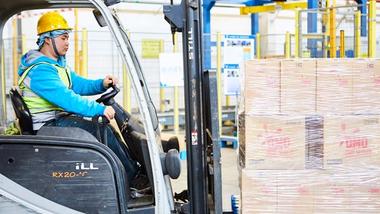
Respect for human rights is embedded in our Code of Business Principles (PDF 1.41 MB) and in our Responsible Partner Policy (PDF 4.45 MB). Paying a living wage is an important part of our approach. We believe that fair compensation can help support workers' wellbeing and financial security and may contribute to a more stable and resilient supply chain.
We’re committed to paying a fair wage to all direct employees, which we achieved across our own operations in 2020. This commitment has been independently recognised through accreditation by the Fair Wage Network in 2021 and again in 2024. To maintain this standard, we annually review employees’ pay and benefits against an independent living wage benchmark, taking corrective action where needed.

We are encouraging suppliers to sign our Living Wage Promise[c], a voluntary commitment to assess their wage gaps and take steps towards closing them. By the end of 2025, Living Wage requirements had been incorporated into the Special Terms Contracts signed by nearly all factories manufacturing exclusively for Unilever.
With support from the Sustainable Trade Initiative (IDH), we’re providing training, tools and other resources to help suppliers understand what a living wage is, why it’s so important and how to get started.

To move towards our longer-term ambition for everyone in our value chain to have a decent livelihood, we’re focusing on countries where the living wage gap is the biggest, where the social safety net for workers is weakest, and where we can make the most impact based on our presence and scale.
Building on the Living Wage Promise, our Responsible Partner Policy (PDF 4.45 MB) includes a future mandatory requirement for our suppliers to pay a living wage to their workers.

Achieving wider option of living wage requires collaboration and collective action. We support efforts to encourage governments to review minimum wage policies and consider how they compare with living wage benchmarks.
We work with business peers and civil society organisations to promote understanding of the potential benefits of living wages for workers, businesses and society. We also engage with investors and other stakeholders to encourage consideration of living wage issues within their environmental, social and governance (ESG) frameworks.

Together with other businesses, in 2024 we asked the International Labour Organization to develop a global definition of living wage – with the aim of supporting greater consistency in how living wage is understood and applied.
Alongside organisations including UN Global Compact, International Labour Organization, IDH and World Benchmarking Alliance, in 2025 we successfully advocated for living wage to be referenced in the Doha Political Declaration (PDF 415 KB) as a key focus area for government policy aiming to advance social development.
We’re working with coalitions like UN Global Compact Forward Faster and Aim-Progress to increase private sector action and address barriers companies face when bringing living wages into their operations.
With other like-minded companies, we support the work of WageIndicator Foundation to provide transparent living wage data for all. So far, living wage estimates for over 180 countries have been released.
See our Annual Report and Accounts (PDF 6.16 MB) for definitions, methodology, scope and boundaries.
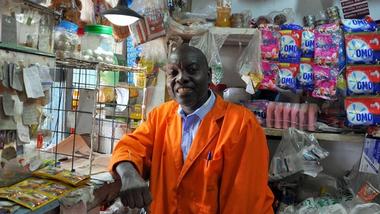
Through access to skills, finance and technology, our programmes help to support small retailers to develop their businesses and improve access to economic opportunities.
Supporting the network of small businesses that sell our products is an important part of our approach to building strong commercial relationships. By helping SMEs develop their capabilities, we aim to support positive outcomes for retailers and the communities in which they operate.

Our digital tools allow retailers to browse products, prices and promotions, place orders, and see what is selling well. This creates a better experience for our customers and can increase sales.
In India, for example, AI enabled features through our Shikhar app are making day-to-day operations easier and more efficient for small-scale retailers. Voice commands support less digitally confident users, while smart basket features can pre-populate regular orders and suggest when to restock.
By the end of 2025, there were 2.12 million small stores using our digital platforms, primarily across South and South-East Asia.

Our Shakti programme was launched in 2001. By the end of 2025, more than 200,000 women entrepreneurs were active in the programme in remote, rural areas of Asia and Africa. The programme is designed to help women start and grow micro-enterprises by providing access to finance and business training, at the same time as expanding access to our products and services in hard-to-reach communities.
Jaza Duka, a digital working capital initiative by Unilever in partnership with Mastercard and KCB Bank, supports over 20,000 small retailers in Kenya. More than half of the participating businesses are run by women, with retailers recording average sales growth of around 20% as a result of improved access to credit and digital payments.
Kabisig eSummit teaches skills such as stock control, financial management, sales and customer service to 200,000 micro-entrepreneurs in the Philippines, mostly women, to help them better manage their businesses and improve their incomes.
See our Annual Report and Accounts (PDF 6.16 MB) for definitions, methodology, scope and boundaries.
TRANSFORM is an impact accelerator supporting visionary enterprises across Asia and Africa. Over its lifetime, the partnership has supported more than 160 impact enterprise and research projects across 19 countries, reaching over 20 million people.
As a joint initiative led by Unilever, alongside the UK Government’s Foreign, Commonwealth and Development Office (FCDO) and EY, TRANSFORM brings together public-sector resources with private-sector capabilities.
It helps entrepreneurs and researchers to test and scale innovative solutions which tackle a wide range of social and environmental issues. The TRANSFORM website includes examples of projects supported over the partnership’s lifetime, including:
TRANSFORM creates opportunities for Unilever to explore new routes to market, pilot business models such as refill, and identify innovative suppliers.
Having delivered its intended outcomes, TRANSFORM will conclude at the end of 2026. It leaves behind a legacy of impact and insights to inform future collaborations.
These learnings are captured in How to collaborate for impact (PDF 28 MB), a playbook designed to help other organisations apply the public-private partnership model.
We are working to reduce greenhouse gas emissions in our operations and across our value chain.

We are collaborating with partners and communities across priority agricultural sourcing regions, landscapes and factories in high water-stress areas.

We are combining innovation and industry collaboration to reduce our plastic waste by using less virgin plastic, improving recyclability and developing alternative packaging solutions.
Progress towards this target is cumulative from 2023 onwards. The 2025 figure includes the Ice Cream business prior to the Unilever Ice Cream demerger.
Following the demerger of our Ice Cream business on 6 December 2025, all territories and activities within the scope of the Ice Cream business have been treated as discontinued operations in our consolidated financial statements. As a result, our sustainability progress metrics focus on our four continuing Business Groups (Beauty & Wellbeing, Personal Care, Home Care and Foods).
A living wage promise is a commitment made by a supplier to progress towards paying a living wage to workers in their own business operations, either through signing a Living Wage Special Terms Contract (STC) with Unilever or by signing Unilever’s Living Wage Promise document.
Have you got a few minutes to complete a survey? We would love to hear about your experience using Unilever.com.