
Our sustainability targets help focus action on issues that can affect the long-term resilience of our business, and where we believe Unilever can contribute. Discover how we’re taking action on our four priority sustainability focus areas: climate, nature, plastics and livelihoods.
How is Unilever taking action on nature?
How is Unilever taking action on nature?
Unilever is taking action across five areas covered by our nature targets:
- Maintaining at least 95% deforestation-free sourcing across our primary deforestation-linked commodities, based on our requirements [a] [b]
- 95% volume of key crops being verified as sustainably sourced by 2030, in line with our Sustainable Agricultural Principles
- Implementing regenerative agriculture practices on 1 million hectares of agricultural land by 2030
- Helping protect and restore 1 million hectares of natural ecosystems by 2030
- Implementing water stewardship programmes for 100% of our production sites located in water-stressed areas by 2030 [b]
Find out more about our approach and why nature is so important for Unilever.
Why is nature business critical for Unilever?
We’re deeply dependent on the natural world, particularly agriculture for our raw materials, and water for our manufacturing and consumer use of our products.
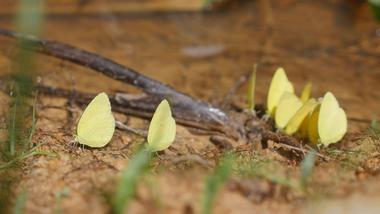
Disruptions to ecosystem services, such as water scarcity, pollinator decline or soil degradation, could impact our operations, supply chains and resource availability.
Physical climate risks can affect crop yields and raw material availability, with implications for our supply chains and some of the farmers within them.
We’re responding to these risks through partnerships and by engaging with government on supportive policy. We’re also connecting our work on nature and climate as part of our approach to managing supply chain risks.
What is Unilever’s progress towards its nature targets?
We are focused on the delivery of our nature targets. Find out about our 2025 progress below and in our Annual Report and Accounts (PDF 6.16 MB).
Target: Maintain no deforestation across our primary deforestation-linked commodities
This target means we aim to maintain at least 95% deforestation-free sourcing year-on-year for our primary forest risk commodities. ‘Deforestation-free’ is defined as the meeting of our requirements, set out in our Annual Report and Accounts (PDF 6.16 MB).[a] [b] [c]
97% of our purchased volumes of palm oil, paper and board, tea, soy and cocoa were deforestation-free in 2025, based on Unilever’s deforestation-free requirements.[b]
Our approach included investing in a more direct palm oil supply chain, verifying suppliers, supporting remediation and working with smallholder farmers.
This work remains a priority for us, both in terms of retaining existing deforestation-free suppliers and onboarding new suppliers.
See our Annual Report and Accounts (PDF 6.16 MB) for definitions, methodology, scope and boundaries.
Target: 95% volume of key crops to be verified as sustainably sourced by 2030
For this target, ‘sustainably sourced’ means volumes of key crops either produced in line with recognised third-party certification aligned with Unilever’s Sustainable Agricultural Principles (PDF 5.01 MB), or matched with credits representing verified sustainably sourced raw materials.[c]
In 2025, 81% of our key crops by volume met these certification requirements, including 19 percentage points matched through purchased sustainability credits.[d]
See our Annual Report and Accounts (PDF 6.16 MB) for definitions, methodology, scope and boundaries.
Target: Implement regenerative agriculture practices on 1 million hectares of agricultural land by 2030
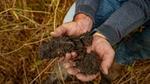
Regenerative agriculture is an outcome-based approach to farming that aims to protect and improve soil health, water, climate and biodiversity, while supporting farmer livelihoods.
By the end of 2025, 34 regenerative agriculture programmes had covered approximately 254,000 hectares cumulatively since 2021.[e]
This included 12 new programmes in 2025, bringing our total to 34 programmes in 17 countries: Argentina, Brazil, Canada, Chile, China, France, Germany, India, Indonesia, Italy, Mexico, Poland, Serbia, Spain, Thailand, the UK and the US.
See our Annual Report and Accounts (PDF 6.16 MB) for definitions, methodology, scope and boundaries.
Target: Help protect and restore 1 million hectares of natural ecosystems by 2030
This target guides Unilever’s action to protect and restore ecosystems within and surrounding our key sourcing locations to help address the wider system risk of biodiversity loss and help address the impact of our sourcing on ecosystem degradation and services.
By the end of 2025, 14 Unilever-supported protection and restoration programmes covered around 660,000 hectares cumulatively since 2021.[e]
This included three new programmes in 2025, including expansion of activities within the Rimba Collective managed by Lestari Capital and a partnership with Conservation International in Ecuador.
We continue to prioritise landscapes based on our commodity footprint, operational presence and the need for additional support from Unilever in the area.
See our Annual Report and Accounts (PDF 6.16 MB) for definitions, methodology, scope and boundaries.
Target: Implement water stewardship programmes for 100% of our production sites located in water-stressed areas by 2030
For this target, water-stressed areas are identified using the methodology set out in our Annual Report and Accounts (PDF 6.16 MB). Our water stewardship programmes aim to improve water security around selected manufacturing sites in areas identified as with ‘high’ or ‘extremely high’ baseline water stress.
By the end of 2025, we had implemented 29 water stewardship programmes since 2021.[b] [f]
These include programmes located in Algeria, Argentina, Brazil, Chile, Cyprus, Egypt, India, Indonesia, Mexico, Nigeria, Pakistan, South Africa, Turkey and United Arab Emirates.
We work through collective action with local experts and other stakeholders in the shared water catchment.
See our Annual Report and Accounts (PDF 6.16 MB) for definitions, methodology, scope and boundaries.
How is Unilever’s nature work interlinked?
Actions towards one target may also be relevant to other targets. For example, regenerative agriculture practices may help us progress towards our sustainable sourcing target. Also, most of our protect and restore programmes are located near sourcing areas where deforestation risk is relevant to our supply chains.
By working towards our nature targets, we can also help deliver progress towards our climate and livelihoods targets.
- Deforestation-free sourcing is one of the actions linked to our scope 3 Forest, Land and Agriculture (FLAG) greenhouse gas emissions reduction target.
- Some agricultural programmes also include training on income diversification that aim to support smallholder livelihoods.
Nature-based solutions are an important part of our climate strategy, as set out in our Climate Transition Action Plan (PDF 7.98 MB) (CTAP).[c]
How is Unilever working in partnership on nature?
Unilever can only make progress on its nature targets by working closely with others in our value chain. That’s why our partnerships are so important.
We work with suppliers in priority sourcing areas, guided by our People & Nature Policy (PDF 2.04 MB) and associated guidelines (PDF 1.63 MB).
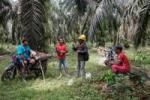
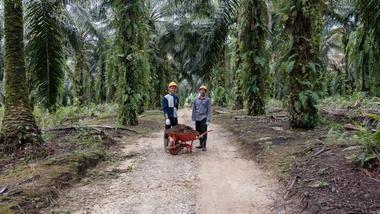
Through our smallholder hubs we’re training palm oil smallholder farmers in the practices set out in our Sustainable Agricultural Principles (PDF 5.01 MB), reaching around 29,500 smallholders in Indonesia since the start of 2024.
We’re supporting programmes to protect and restore ecosystems, leveraging multi-stakeholder collaboration in our palm sourcing areas, such as through Conservation International in North Sumatra.
We’re working to encourage adoption of practices aligned with our Sustainable Agriculture Principles, such as partnering with peer companies in the US to help provide access to tools, training and funding.
We have worked with Axa and Tikehau Capital on an investment initiative focused on regenerative agriculture.
And through Business for Nature, we’re one of more than 100 business and financial institutions that have been advocating for governments to adopt policies that aim to halt and reverse nature loss.
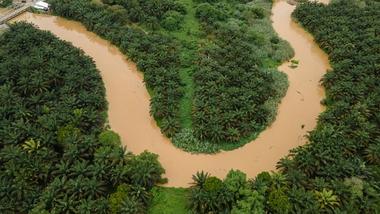
What is Unilever doing to tackle deforestation in its supply chains?
Unilever is focusing our efforts on primary commodities where the risk of deforestation is highest. This has been a complex undertaking, requiring significant investment and collaboration.
97% of purchased volumes were verified as deforestation-free in 2025, based on our deforestation-free requirements.[b]
We’re now working to maintain at least 95% deforestation-free supply chains for our primary deforestation-linked commodities year on year.[a] [b] [c]
To do this, we’re building new skills in our supply chains, investing in infrastructure and technology, and advocating for system-wide change across the palm oil industry.

Maintaining our progress
‘Deforestation-free’ is defined as the meeting of our deforestation-free requirements, set out in our Annual Report and Accounts (PDF 6.16 MB).
97% of our purchased volumes of palm oil, paper and board, tea, soy and cocoa were deforestation-free in 2025, based on these requirements.[b]
To maintain this progress, we require suppliers to meet our deforestation-free sourcing requirements and are training smallholder farmers.
We're also investing in solutions to provide greater supply chain transparency, including direct sourcing capabilities and technologies that help identify and address deforestation risks.
Beyond our own supply chain, we’re working with industry partners to support wider adoption of deforestation-free sourcing practices across the palm oil industry.

Working with smallholders and suppliers and investing in infrastructure and technology
We’re focusing our efforts in the following areas:
- Training smallholders to farm in accordance with our Sustainable Agricultural Principles (PDF 5.01 MB). We’ve now mapped the plots of over 55,000 palm smallholder farmers and are supporting RSPO smallholder certification across our palm supply base.
- Continuing the verification of suppliers against our Independent Verification Protocols on deforestation-free sourcing. We also support the remediation of suppliers with previous non-compliances.
- Investing over €280 million in Unilever Oleochemicals Indonesia (UOI) since 2021 to directly source palm feedstocks, placing less reliance on intermediaries and increasing supply chain transparency and traceability.
- Partnering with technology providers to use technology, including remote-monitoring and data-analysis tools, to help identify and assess deforestation risk.

Driving change across the palm oil industry
We are members of industry groups and coalitions, that provide forums for collaboration on farming practices, measurement and evaluation. Some of these partners include:
- Roundtable on Sustainable Palm Oil (RSPO)
- Consumer Goods Forum – Forest Positive Coalition
- Palm Oil Collaboration Group
- Malaysian Sustainable Palm Oil Standard – Impact Alliance
We also advocate for relevant governments to adopt and enforce policies intended to address deforestation and conversion of natural ecosystems. This means developing regulations and standards that aim to mainstream traceability, monitoring and enforcement while supporting farmers to adopt practices that help build resilient commodity supplies while protecting forested landscapes.
To support this, we’re sharing our learnings from many years of working on traceability and verification, smallholder productivity and supplier engagement.
See our Annual Report and Accounts (PDF 6.16 MB) for definitions, methodology, scope and boundaries.
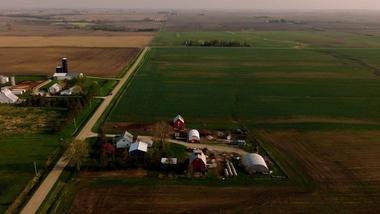
How is Unilever sourcing crops?
With the aim of building more resilient supply chains, we’re working with suppliers and farmers on how our key crops are grown and sourced.
This includes buying crops produced against recognised certification or other standards aligned with our Sustainable Agricultural Principles (PDF 5.01 MB). It also means supporting the adoption of regenerative agriculture practices in selected sourcing regions.

Using our purchasing power
For over a decade, we’ve been working with suppliers and farmers to buy key crops aligned with Unilever’s Sustainable Agricultural Principles (PDF 5.01 MB), or using credits representing verified sustainably sourced raw materials.
In 2025, 81% of our key crops by volume met these certification requirements, including 19 percentage points matched through purchased sustainability credits.[d]
Unilever’s Sustainable Agricultural Principles enable us to identify and benchmark codes, standards and assessments that meet our sustainable sourcing requirements.
Scaling regenerative agriculture practices
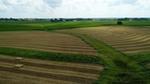
Drawing on our Regenerative Agriculture Principles (PDF 8.34 MB), our regenerative agriculture programmes aim to address a range of environmental impacts associated with farming, including those related to climate, soil and biodiversity. The intention is to help smallholder farmers to protect their incomes and become more resilient to the impacts of climate change.
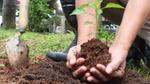
Regenerative agricultural practices vary by programme and may include measures such as cover cropping, crop rotation, reduced tillage and alternatives to synthetic fertilisers. Programme outcomes are assessed through project monitoring.
In 2025, we implemented 12 new regenerative agriculture programmes including with canola farmers in Canada and soy farmers in Brazil. We now have 34 active regenerative agriculture programmes across 17 countries, covering 254,000 hectares since 2021.[e]
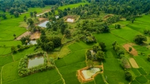
Partnering to support implementation and measure impact
To implement our regenerative agriculture programmes, we work closely with agricultural experts and implementation partners to support farmers’ capabilities and capacity. With our technology partners, we’re also using advanced technologies to collect farm and supply chain data:
- We’re working with Nature Metrics and Biome Makers to use environmental DNA sampling to collect data on indicators including soil conditions and insect biodiversity.
- We’re guided by Rothamsted Research on the design of robust soil organic carbon sampling and modelling approaches.

How is Unilever working in priority landscapes?
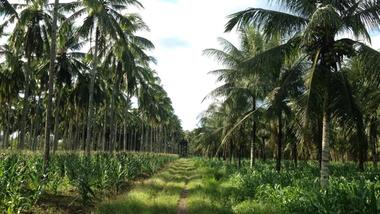
We’re collaborating with NGOs and local communities to support the protection and restoration of natural ecosystems in our key sourcing locations, or where there’s opportunity for Unilever to pursue our target elsewhere.
These are long-term, multi-stakeholder programmes largely focused in South-East Asia, working with governments, communities, smallholders, suppliers and civil society organisations to deliver projects that aim to protect standing forest, improve ecosystem quality, promote regenerative agriculture practices, and restore degraded land.
Together, these approaches aim to create the conditions to support deforestation-free commodity production while aiming to strengthen the resilience of landscapes, communities, and supply chains.
Progressing towards our target
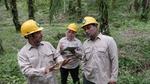
In 2025, we supported the implementation of three new programmes to protect and restore nature in areas closely associated with our sourcing locations.
They include long-term partnerships across three provinces in Indonesia that are supply bases for our palm oil processing facility in North Sumatra.
This takes us to a total of 14 protection and restoration programmes comprising 34 projects covering around 660,000 hectares cumulatively since 2021.[e]
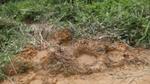
Investing in nature protection and restoration programmes
Much of our progress with programme implementation comes from working in multi-stakeholder partnerships.
Unilever is a founding member of, and provides conservation finance to, the Rimba Collective, which is managed by Lestari Capital. The initiative has stated aims to protect and restore over 500,000 hectares and improve the livelihoods of 32,000 people.
We’re also supporting the work of WWF-Malaysia and local non-profit organisations that aim to preserve key plant species, restore riverside reserves and create wildlife corridors in Malaysia.
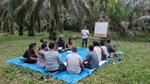
Taking a landscape approach to nature protection and restoration
The programmes involve stakeholders within a jurisdiction in planning and implementation, considering land and labour rights.
Our Reimagining Landscapes report (PDF 14.04 MB) sets out examples of programmes in Indonesia and Malaysia that include planting trees, restoring degraded land, and certifying plantations and small farms (RSPO).
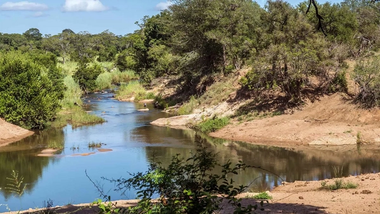
What is Unilever doing to help safeguard water supply?
Water is essential for our business – from growing crops and sourcing other commodities, to formulating and manufacturing our products, through to consumer use. It’s also vital for nature and the communities sharing the river catchment areas in which we operate.
Unilever has identified areas around some of our manufacturing sites as having ‘high’ or ‘extremely high’ baseline water stress, using methodology set out in our Annual Report and Accounts (PDF 6.16 MB).
We’re working to improve water security around those manufacturing sites through programmes aligned to the Alliance for Water Stewardship Standard or our Prabhat approach in India, collaborating with other stakeholders in the shared water catchment.
These programmes form part of our approach to managing water-related operational risks.

Progressing our journey on water stewardship
Previously, we have focused our efforts on site management plans aiming to minimise water extraction and reuse and recycle water where feasible in our operations. We’re now working with others on water security challenges in catchments around selected manufacturing sites.
In 2025, we implemented nine additional water stewardship programmes, bringing our total to 29 active programmes in water-stressed areas in 14 countries.
In India, programme activities have included irrigation, rainwater collection and more water-efficient farming.
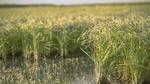
Partnering on water stewardship
We work closely with NGOs and other businesses to deliver our water stewardship programmes. Our regional implementation partners – including the Nature Conservation Centre (DKM) in Turkey, The Nature Conservancy (TNC) in Brazil and the World Wildlife Fund for Nature (WWF) in South Africa, Algeria and Pakistan – bring local knowledge and expertise to our programmes.
Our Responsible Partner Policy (PDF 4.45 MB) includes water-related requirements, including compliance with applicable water abstraction, use and wastewater discharge laws and permits, and environmental management systems to identify and mitigate water management and effluent risks.
Principles and policies
Our nature programmes and interactions with suppliers are guided by some key policies and principles.
Responsible Partner Policy (PDF 4.45 MB)
People & Nature Policy (PDF 2.04 MB) and associated guidelines (PDF 1.63 MB)
Regenerative Agriculture Principles (PDF 8.34 MB)
Sustainable Agricultural Principles (PDF 5.01 MB)
Our other sustainability priorities
Climate
We are working to reduce greenhouse gas emissions in our operations and across our wider value chain.
Plastics
We are combining innovation and industry collaboration to reduce our plastic waste by using less virgin plastic, improving recyclability and developing alternative packaging solutions.
Livelihoods
We are supporting the livelihoods of people in our value chain through our smallholder farmer, small retailer and living wage programmes.
[a]
(1, 2, 3) In 2020, we set a target to achieve a deforestation-free supply chain in palm oil, paper and board, soy, tea and cocoa. Having delivered 97.5% deforestation-free sourcing in 2023, we then set a new target to maintain deforestation-free sourcing on an annual basis at 95%. This commitment is aligned with Science Based Targets Initiative (SBTi) guidance and forms part of Unilever’s 2030 Scope 3 Forest, Land and Agriculture (FLAG) emissions reduction target. Unilever’s deforestation-free metric is measured against our own deforestation-free requirements. The 2025 deforestation-free result was calculated for the five primary deforestation-linked commodities.
[b]
(1, 2, 3, 4, 5, 6, 7, 8) Unilever may be subject to mandatory deforestation-related and water stewardship obligations under the laws of various jurisdictions, including requirements applying to certain commodities and products placed on relevant markets. Compliance with these obligations may contribute to the progress reported against this target. Reported progress may therefore reflect both compliance with applicable legal requirements and voluntary action undertaken under Unilever’s deforestation-free sourcing and water stewardship programmes.
[c]
(1, 2, 3, 4) The Ice Cream Company (Ice Cream) completed its separation from Unilever and began operating as a standalone company on 6 December 2025. All territories and activities within the scope of the Ice Cream business have been treated as discontinued operations in our consolidated financial statements. As a result, our sustainability progress metrics focus on our four continuing Business Groups (Beauty & Wellbeing, Personal Care, Home Care and Foods). From 2026, cocoa is no longer one of Unilever’s priority deforestation-linked commodities in scope of our deforestation-free target, and cocoa and vanilla are no longer included in our key crops as part of our sustainable sourcing target.
[d]
(1, 2) The 2025 sustainable sourcing result was calculated using 12 key crops: cereals and starches, cocoa, coconut oil; dairy; palm oil; paper and board; rapeseed oil; soy oil; sugar; tea; vanilla and vegetables. These accounted for over 77% of Unilever's agricultural sourcing by volume, excluding Ice Cream, in 2025. This included 19 percentage points purchased from non-sustainable sources but matched with credits representing verified sustainably sourced raw materials. Crops purchased with credits representing verified sustainably sourced raw materials are compensatory and not associated with biodiversity improvements.
[e]
(1, 2, 3, 4) The hectare figure measures the area on which programmes have been implemented; it does not, by itself, demonstrate nature outcomes.
[f]
In 2020, Unilever set a target to implement water stewardship programmes in 100 locations in water-stressed areas by 2030. In 2026, Unilever approved an update to this target to cover 100% of production sites in water-stressed areas by 2030. This did not impact reported performance.